Hot water cylinders
There are essentially only two types of cylinder system: vented and unvented. Within those, though, there is a wide range of types, brands and energy setups to consider, and some may be specific or necessary to your particular situation.
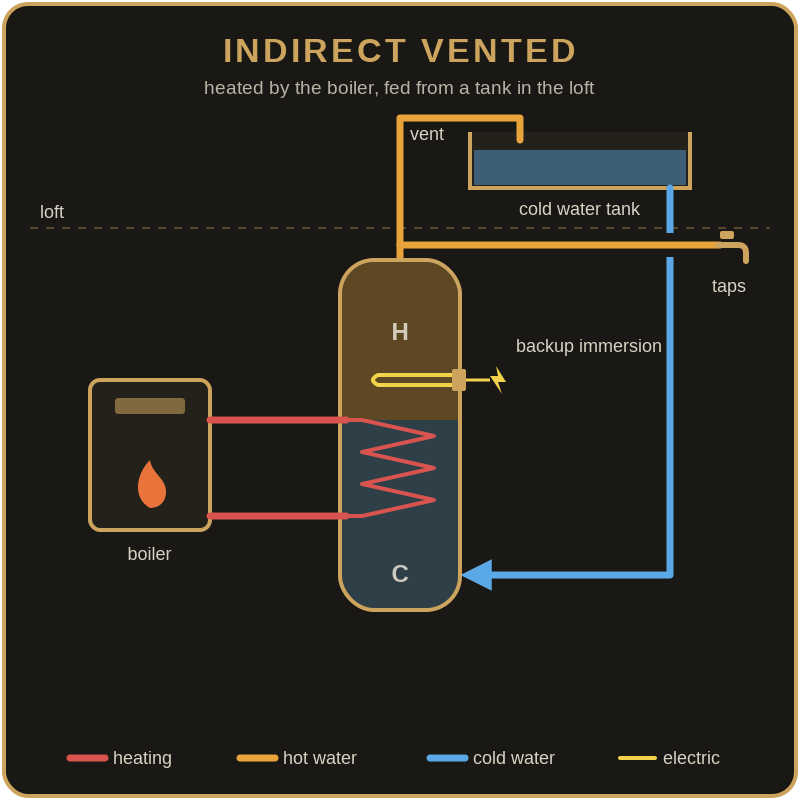
What’s the difference? The key difference is that a vented system is supplied from a cold water tank or cistern and relies mainly on gravity for its power (water pressure). This can be boosted by pumps where needed, such as for a shower, or for the entire hot water system as long as the pump doesn’t outpower its supply.
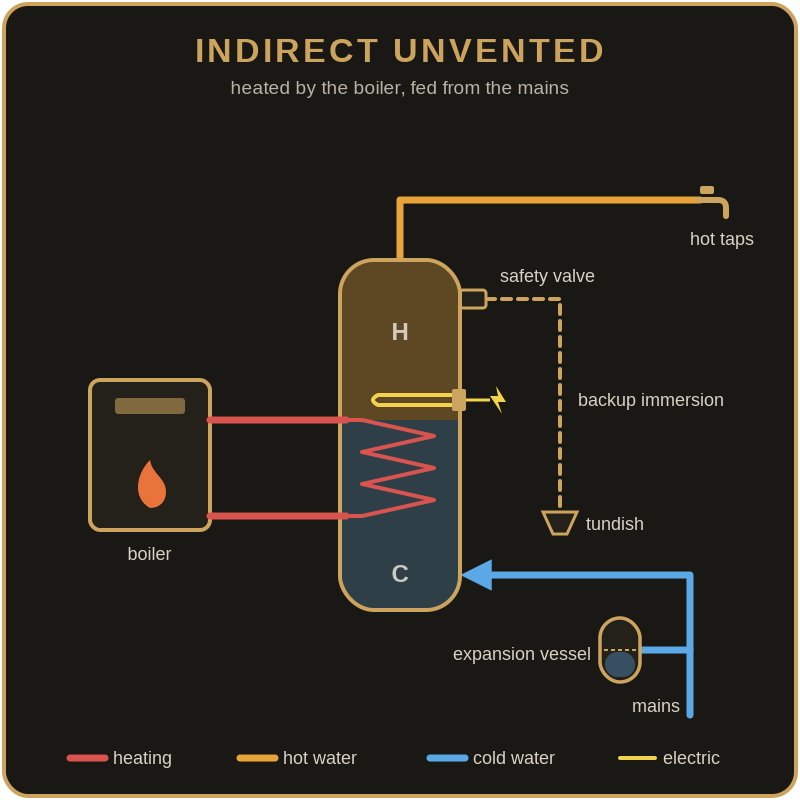
Unvented systems, on the other hand, are fed from the mains, so you get equal pressure and flow from your hot and cold taps. Except in very particular situations there is no need to boost them, but there are requirements that have to be met for the system to work correctly and safely.
We can visit to inspect your setup and requirements and advise you accordingly.
Indirect or direct?
Vented and unvented cylinders both come in two versions. An indirect cylinder is heated by your boiler: hot water from the boiler runs through a coil inside the cylinder and warms the water around it. Most also have an electric immersion heater as a backup. A direct cylinder has no boiler connection at all and is heated by electricity alone.
Electric-only (direct) cylinders
If you don't have gas, or your heating is electric, a direct cylinder gives you a full tank of stored hot water without a boiler.
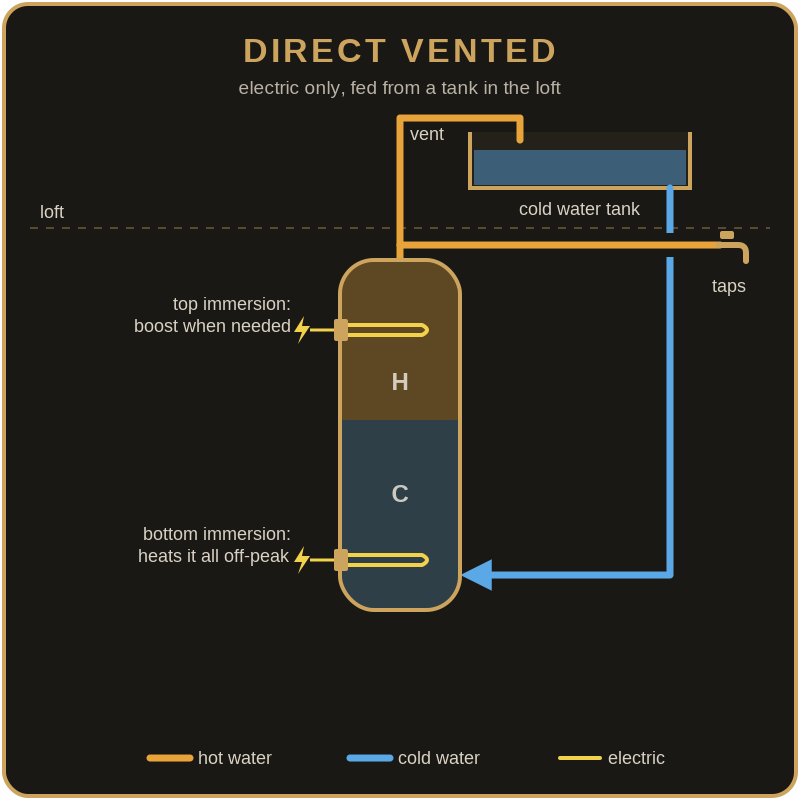
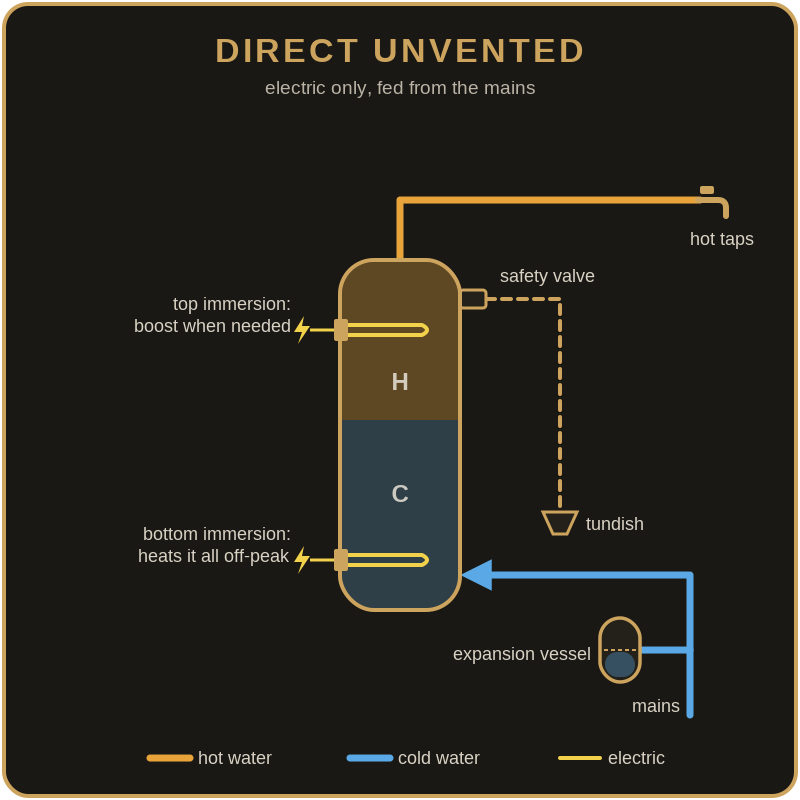
- Two immersion heaters: most direct cylinders have two. The bottom one heats the whole cylinder, usually overnight on a cheaper off-peak tariff such as Economy 7. The top one heats a smaller amount at the top of the cylinder, as a boost when you run short during the day.
- Vented or unvented: a direct vented cylinder is fed from a cold water tank in the loft, so the pressure is low, as with any tank-fed system. A direct unvented cylinder is fed from the mains for full pressure at every tap and shower, and has the same expansion vessel and safety valves as any unvented cylinder.
- Where they suit: flats and homes without a gas supply, homes with electric storage heaters, and homes moving away from gas. They also work well with solar panels, as spare solar power can be sent to the immersion heater.
- Things to consider: electricity usually costs more per unit than gas, so running costs depend on making the most of off-peak rates. Once the hot water runs out, it takes longer to reheat than a boiler-fed cylinder, so getting the size right for your household matters.
Unvented cylinders, direct or indirect, must be installed by a G3-qualified installer and should be serviced every year. We hold that qualification and can advise on the right size and setup for your home.
Cylinders
How the different types work