Heating your home
There is more than one way to heat a home, and the right choice depends on your property, how you use each room, what fuel you have and your budget. These are the main types we install and maintain.
Wet central heating
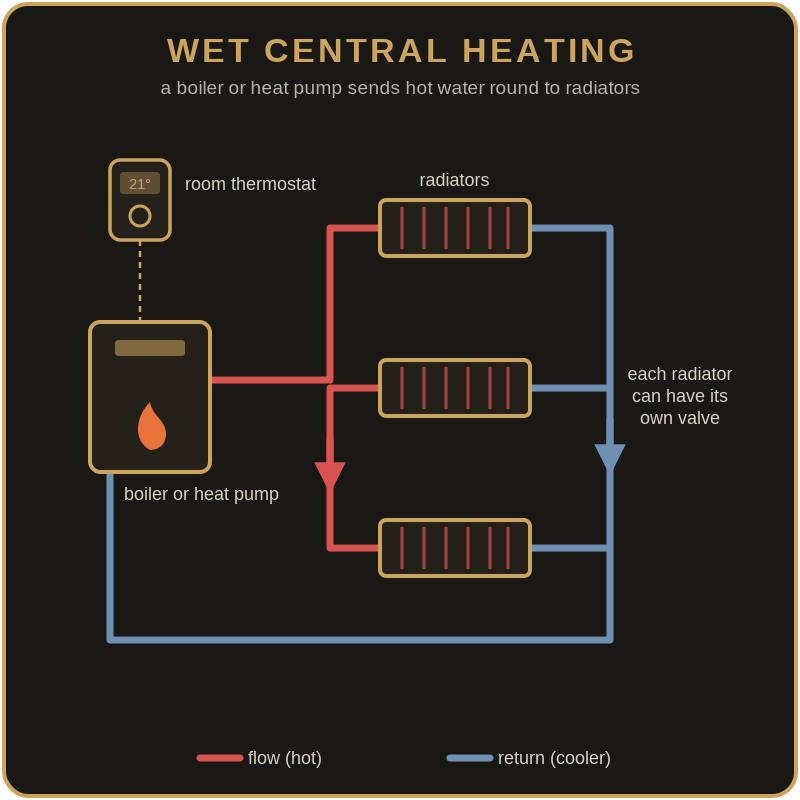
This is the system most of us know: a boiler or heat pump heats water, and a pump sends it round the house to radiators in each room. It warms rooms quickly, works with every type of boiler, and individual radiators can be added, moved or upgraded as your needs change.
To keep it running well, the system should be clean and balanced, with good controls. A powerflush, balanced radiators and smart controls can all make a noticeable difference to comfort and running costs. If you are moving to a heat pump, some radiators may need to be larger, because heat pumps run at lower water temperatures than boilers.
Wet underfloor heating
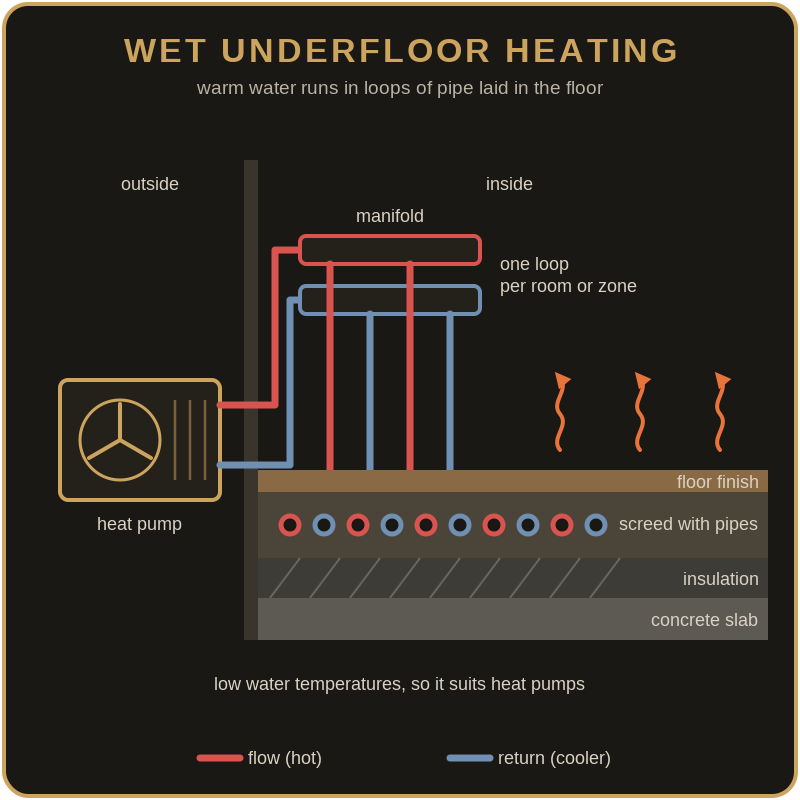
Instead of radiators, warm water runs through loops of pipe laid in the floor, usually in a screed or in panels under the floor finish. The whole floor becomes a gentle, even heat source, with no radiators taking up wall space and no cold spots.
Because it works at much lower water temperatures than radiators, wet underfloor heating is an especially good match for heat pumps. Each room or area can have its own thermostat, controlled from a manifold that sends water to each loop. It is best fitted in new builds, extensions and major renovations, when the floor is being laid anyway. It is slower to warm up than radiators, so it suits steady, all-day heating rather than quick bursts.
Electric underfloor heating
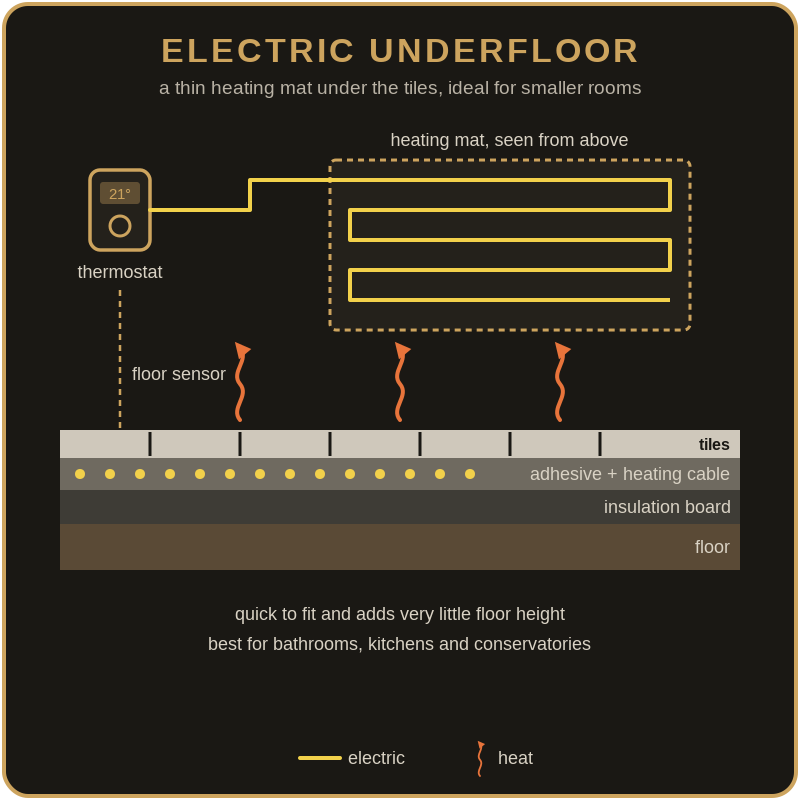
Thin heating mats or cables are laid just under tiles or other flooring, adding very little to the floor height. They are quick and affordable to install, and need no pipework or connection to your boiler.
Electric underfloor heating is ideal for smaller areas such as bathrooms, en-suites, kitchens and conservatories, where warm tiles make a real difference. Because it runs on electricity, it becomes expensive to run over large areas, so we don't recommend it as the main heating for a whole house.
Electric heaters
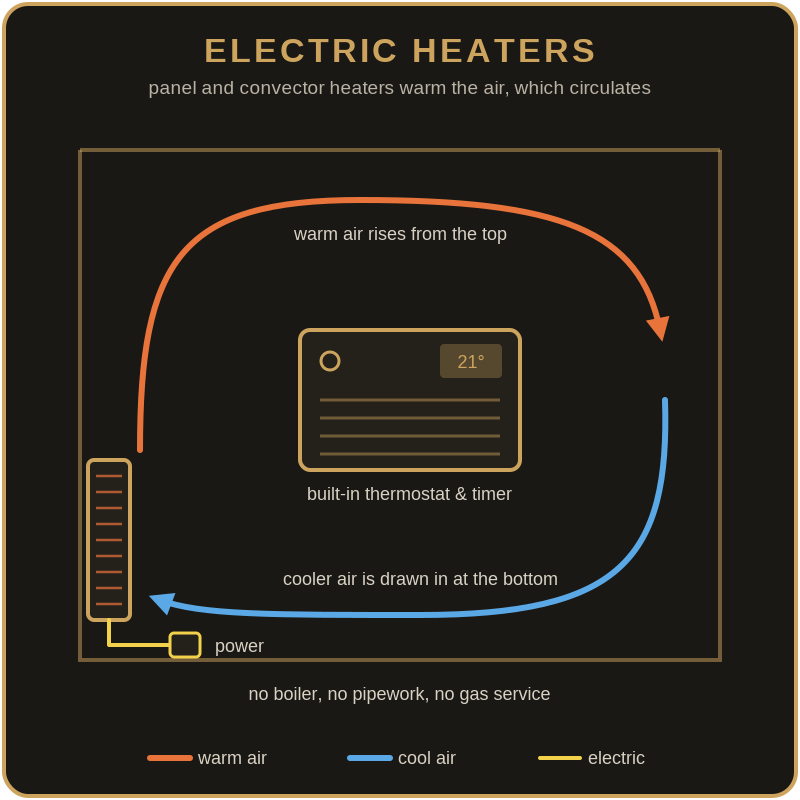
Modern electric heaters, such as wall-mounted panel heaters and convector heaters, are becoming a popular choice. They warm the air in the room, which then circulates naturally, and many come with their own thermostat, timer and smart controls, so each room can be set separately.
With no boiler, no pipework and no annual gas service, they are simple to install and maintain, and work well in flats, extensions, garden rooms and homes without gas. As with any electric heating, running costs depend on the size of the space and how well it is insulated.
Not sure which is right for you?
Many homes use a mix: underfloor heating downstairs with radiators upstairs, or electric underfloor heating in a bathroom alongside a wet central heating system. We can look at your home, its insulation and how you use each room, and recommend the setup that makes the most sense.
Heating Systems
The different types at a glance